
Guest Faculty Session | 6 August 2026 | Seed Financial Academy
Ask most students what “audit” means, and you will probably hear the same three answers: tick marks, checking vouchers, and, increasingly, “Isn’t AI going to do that soon?” Mr. Suyogya Bhandari spent his session at Seed Financial Academy challenging those ideas.
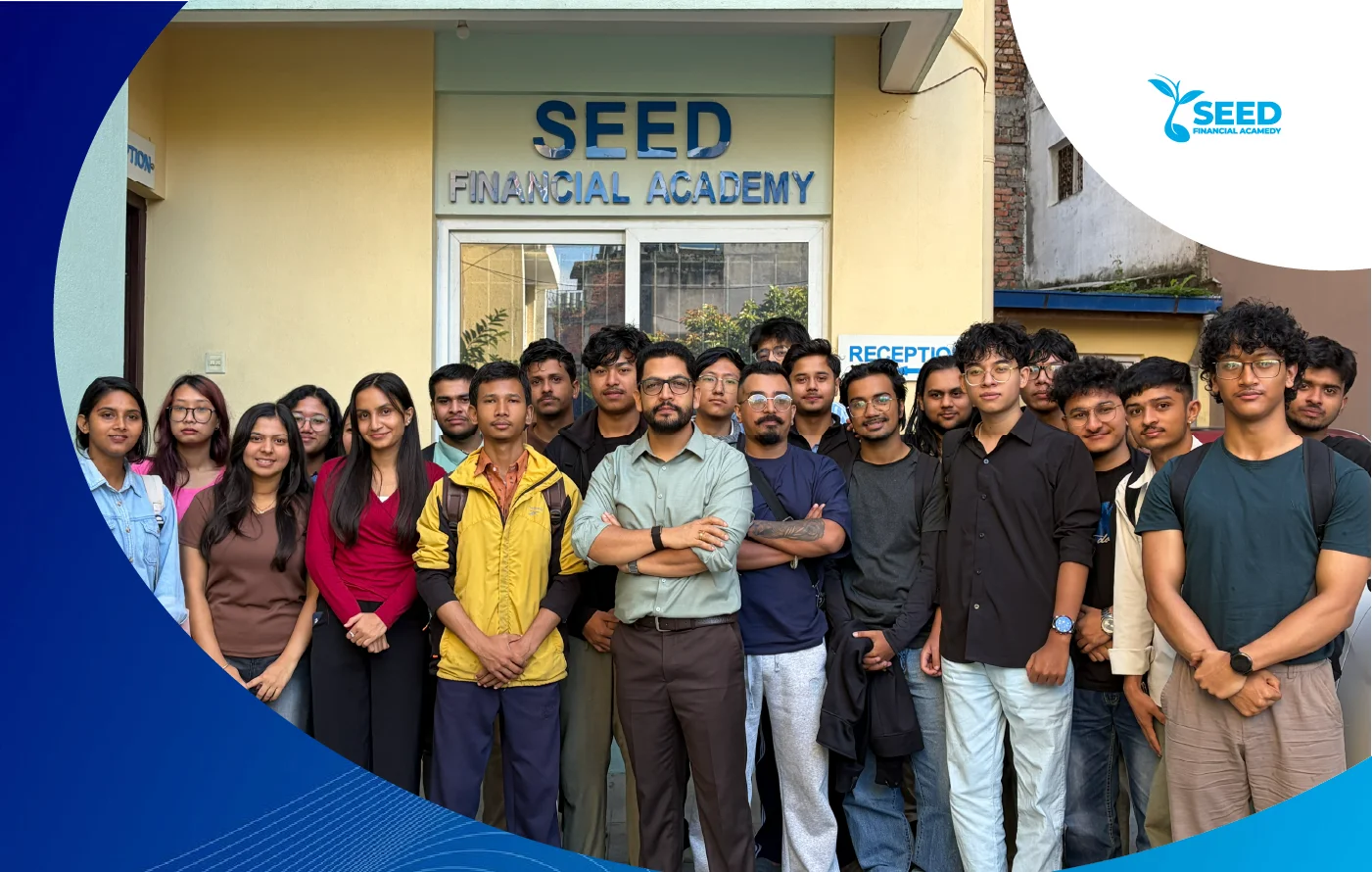
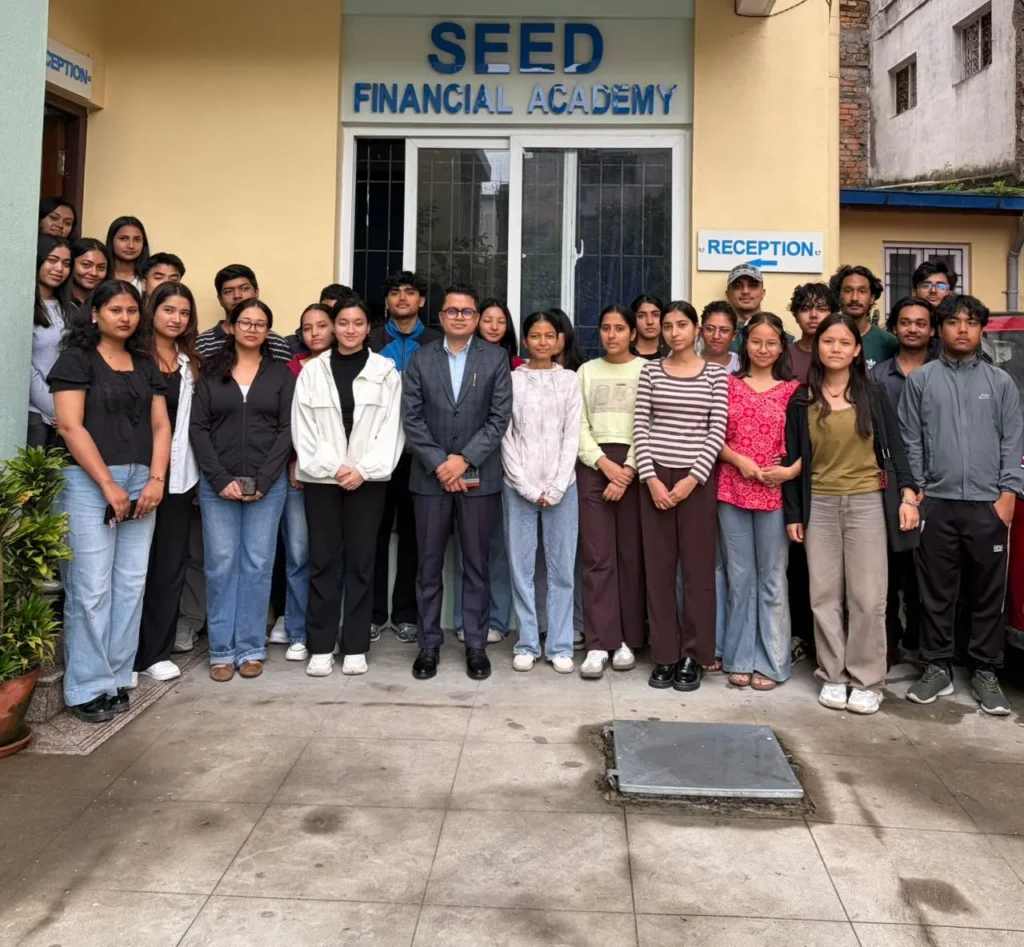
A Chartered Accountant, DISA holder, ISO 27001:2022 Lead Auditor, and Partner at R.S.M.A. Associates, he came to talk about something that is rarely covered in a syllabus: what an audit qualification can mean for your career over the next fifteen years. The session, titled “Beyond the Audit File: How Audit & Assurance Opens Doors to Diverse Careers,” quickly became an engaging discussion. Students had plenty of questions, and the room stayed interactive throughout the session.
“The value is not in the hammer. It’s in knowing where to tap.”
Early in the session, Mr. Bhandari shared the story of an engineer and a hammer. An engineer was called in to fix a machine that nobody else could repair. He simply tapped the machine once and sent a large invoice. The tap itself cost almost nothing. What mattered was knowing exactly where to tap. His message to the students was clear: an auditor’s value is not measured by the number of working papers they prepare. It comes from the quality of the insight they provide.
This idea shaped much of the session that followed. Audit, he explained, is not simply about verifying financial information. Modern audit covers internal controls, risk management, technology and data, and, at senior levels, governance and business advisory. Auditors are not just accountants. They are professionals whom organisations rely on when confidence and trust are at stake.
Audit creates confidence, and confidence creates economic value.
The helicopter view
Why is audit such a strong starting point for a career? One major reason is the exposure it provides. Mr. Bhandari pointed out that in three years, an auditor may gain an understanding of more industries than many professionals experience in ten years.
Banking, insurance, and telecom. Manufacturing and hydropower. NGOs and government bodies. Healthcare and hospitality. Retail and e-commerce.
You do not simply read about these businesses. You work within their systems, trace their transactions, and speak with the people who run them. Very few careers give young professionals this kind of exposure early in their working lives.
At the same time, audit helps develop a wide range of skills:
| What you do in audit | What you’re actually building |
|---|---|
| Testing controls | Analytical thinking |
| Identifying risks | Critical thinking |
| Understanding businesses | Business acumen |
| Interviewing clients | Communication |
| Regulatory compliance work | Attention to detail |
| Audit reporting | Written communication |
| Working papers | Documentation discipline |
| Team audits | Collaboration |
Technical skills get you hired. Professional skills make you a leader.
One of the most-discussed parts of the session was the audit skills pyramid. At the base were technical skills such as accounting, IFRS, ISA, tax, and internal controls. In the middle were professional skills, including communication, presentation, leadership and negotiation. At the top were technology skills such as Excel, Power BI, data analytics, ERP and AI.
Mr. Bhandari summed it up simply: technical skills get you hired, but professional skills help you become a leader.
He also explained how responsibilities change as an auditor progresses through their career. A trainee may begin with testing and documentation. An executive starts developing a deeper understanding of processes. A senior executive focuses more on assessing risk. A manager takes responsibility for clients, while a partner moves into the role of a business advisor. As your career develops, technical knowledge becomes the foundation rather than the final goal.
Audit is not the destination. It’s the launchpad.
This was one of the central messages of the session and one that generated many questions from students. Mr. Bhandari explained that an audit foundation can lead to several different career paths, including:
- Audit & Assurance – external and internal auditor, assurance manager
- Risk Advisory – risk consultant, governance advisor
- Technology Risk – IT auditor, cyber risk consultant, technology risk consultant
- Forensic Services – forensic accountant, fraud investigator
- Data Analytics -using Power BI, SQL and Python to turn large datasets into useful audit insights
- ESG & Sustainability – environmental reporting, social impact and ISSB frameworks
The opportunities also extend beyond traditional audit practice. An audit professional can move from audit associate to financial controller, finance director and eventually CFO. The financial understanding and risk awareness developed through audit can provide a strong foundation for senior leadership roles.
Mr. Bhandari also reminded students that audit offers strong international career opportunities. Audit professionals are in demand across the Middle East, Singapore, Europe, the US, Australia and Canada. Understanding this early can influence how students plan their careers.
What about AI?
It was a question that was likely to be asked, and Mr. Bhandari addressed it directly. Audit is already changing because of technology. Sample testing is increasingly moving towards full-population testing. Manual vouching is being replaced by automated pattern and trend detection. Physical files are moving to cloud-based audit systems, while Excel is increasingly being complemented by tools such as Power BI.
AI will not replace auditors. It will replace repetitive work.
Professional scepticism, ethics and judgement cannot simply be automated. These are the qualities that are becoming even more important in the profession.
His advice to students was practical: build skills in data analytics, digital literacy and AI, and consider certifications such as CIA or CRISC for audit and risk, CISA or DISA for information systems, ISO 27001 Lead Auditor or CISSP for cybersecurity, and Power BI or data analytics credentials for the data side.
A career in real time
To make these ideas more relatable, Mr. Bhandari shared his own career journey. He began in statutory audit in 2008, later moved into banking sector audits, progressed into IS audit, worked with international firms, and eventually expanded his work into cybersecurity, VAPT and ISO 27001.
The lesson he drew from his own journey was not about talent or luck. It was about continuous learning, adaptability, and being willing to specialise.
The closing question
Mr. Bhandari ended the session with an image that students are unlikely to forget: red pen or flashlight?
The inspector finds mistakes, points out weaknesses and focuses on the past. The trusted advisor identifies risks, builds confidence and helps guide better decisions. The best auditors, he said, do not simply find problems. They help organisations recognise opportunities.
His final message was equally powerful: your first audit file could be the first step towards becoming a CFO, a partner or a leader. Audit is not merely a profession. It is a platform for lifelong learning and leadership.
Five things students took away
- Audit builds trust -and trust enables businesses, investors and society to make informed decisions.
- Skills matter more than job titles.
- Audit is a launchpad, not a destination.
- Technology is transforming audit -but it is not replacing professional judgement.
- Never stop learning. Curiosity and certification are what separate good professionals from exceptional ones.
Seed Financial Academy is Nepal’s first Platinum Approved ACCA College, a Licensed ACCA CBE Centre and an ACCA Approved Employer (Trainee Development – Platinum).
Its guest faculty series brings senior practitioners into the classroom, giving students a clearer understanding of where their qualifications can take them.
Which one are you training to be — the red pen or the flashlight? Tell us in the comments.
Want to be in the room for the next session?
info@seedfinancial.edu.np | www.seedfinancial.edu.np | +977-9823078202